

Writer, Translator, Poet Thomas Hitoshi Pruiksma on his literary Journey with Tamil


Key Takeaways
- Thomas Hitoshi Pruiksma's literary journey began unexpectedly in Madurai, India, leading him to dedicate over two decades to the Tamil language.
- His deep immersion in Tamil culture led him to translate classical works like Avvaiyar's poems and Tiruvalluvar's Tirukkural, earning him prestigious awards.
- Translation, for Pruiksma, emerged not as a career choice but as an intrinsic need to share the profound beauty of Tamil literature he discovered.
- Pruiksma's experiences highlight how learning a new language can fundamentally alter one's perception of the world.
- He emphasizes the value of dedicated, one-on-one teaching and the ongoing engagement with contemporary Tamil writers.
- His personal writing projects, including a novel, reflect his enduring fascination with themes of music, adolescence, and time.
My guest for today is Thomas Hitoshi Pruiksma — an American writer, poet, and translator who has spent more than two decades of his life inside the Tamil language. Thomas first arrived in Madurai in 1998, almost by accident, planning to study Spanish and ecological ethics, and instead found himself apprenticed to a remarkable teacher, Dr. K. V. Ramakoti.
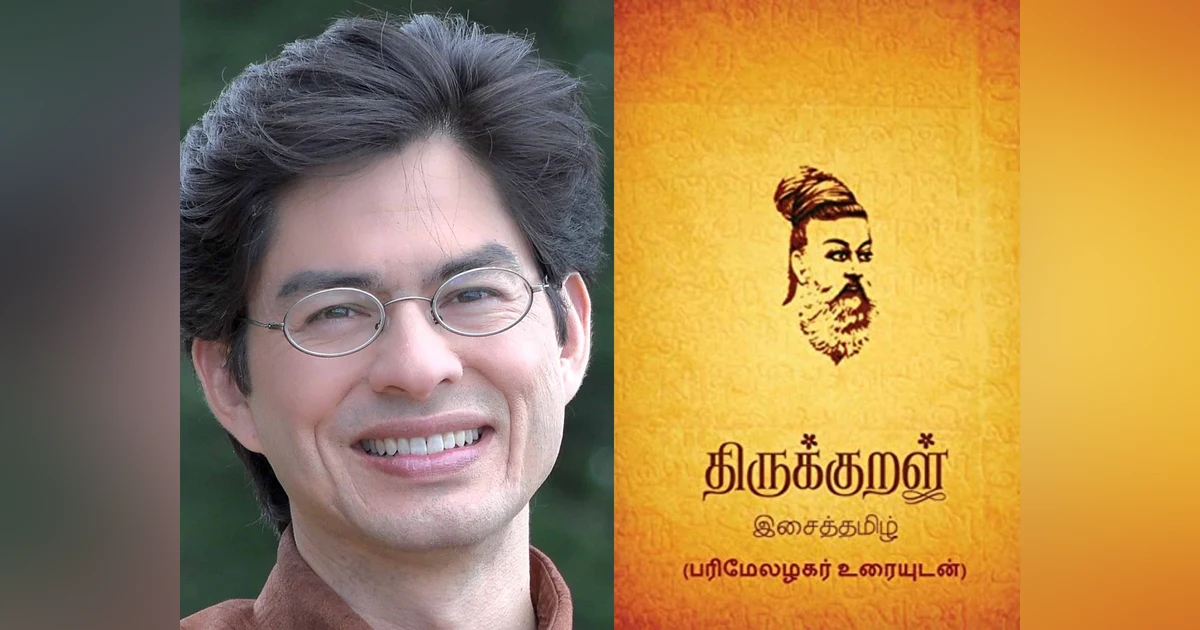
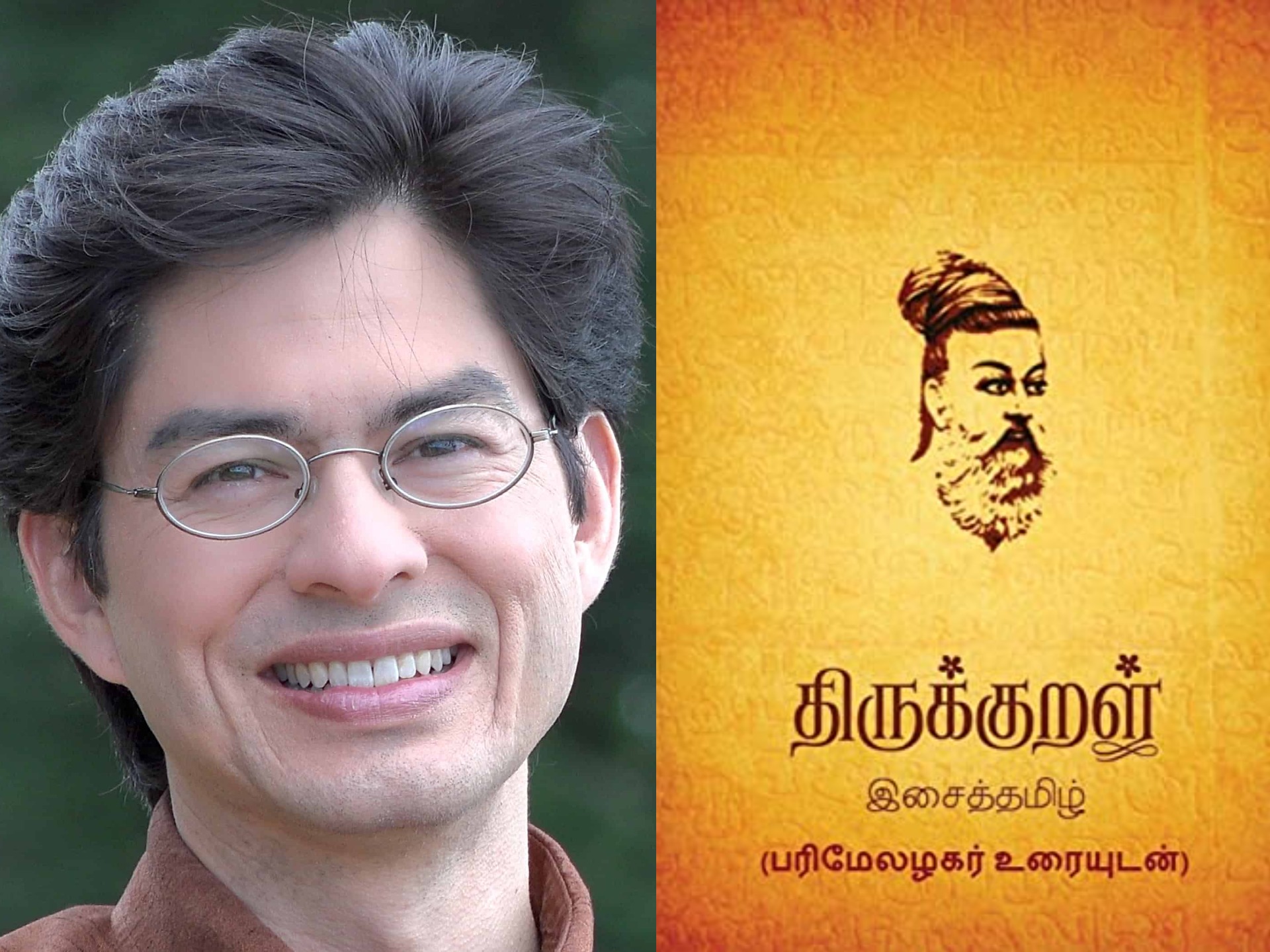
That apprenticeship reshaped his entire life, drawing him from spoken Tamil into the world of Sangam poetry, Avvaiyar, and eventually the Tirukkural. His books include Give, Eat, and Live: Poems of Avvaiyar, A Feast for the Tongue, and his celebrated translation The Kural: Tiruvalluvar's Tirukkural, published by Beacon Press and honoured with Tamil Nadu's Ancient Tamil Literature Promotion Award.
Alongside his Tamil work, Thomas has spent years translating Juan Rulfo's Spanish classic Pedro Páramo, and he is now writing his own novel, The Pines, about music, adolescence, and time. In our conversation, we talk about his childhood love of books and magic, the strange twist of fate that took him to Tamil Nadu instead of Mexico, and how learning Tamil changed the very way he perceives the world.
We also talk about how translation found him — not as a plan, but as an inner necessity to share the poems he had fallen in love with. He speaks about the twelve years his teacher spent quietly nudging him towards translating the Tirukkural, his deep love of one-on-one teaching, and his continuing engagement with contemporary Tamil writers like Perumal Murugan.
It is a rich, wide-ranging conversation about language, devotion, and the long, patient work of carrying words across worlds. So settle in, and let's get started with Thomas Hitoshi Pruiksma.
To Know more about Thomas's Work, please visit -
If you enjoy Harshaneeyam Podcast please follow the show on Apple, Spotify, or your favourite podcasting platform and leave a review for us. It will help truly help us; and don't forget to Share our podcast link with your other friends who enjoy similar content.
To help us provide even more value, using the link given below in the show notes to complete our brief Listener Survey. Your feedback is the secret ingredient that helps us improve and create content tailored to your interests!
https://www.harshaneeyam.com/survey/Listener/
* Please complete Harshaneeyam Listener Survey using the above link.
It would be lovely to have your feedback.
***Disclaimer: The views and opinions expressed by Interviewees in interviews conducted by Harshaneeyam Podcast are those of the Interviewees and do not necessarily reflect the official policy or position of Harshaneeyam Podcast. Any content provided by Interviewees is of their opinion and is not intended to malign any religion, ethnic group, club, organization, company, individual, or anyone or anything.
This podcast uses the following third-party services for analysis:
Podtrac - https://analytics.podtrac.com/privacy-policy-gdrp
Frequently Asked Questions
Who is Thomas Hitoshi Pruiksma and what is his connection to Tamil literature?
Thomas Hitoshi Pruiksma is an American writer, poet, and translator who has devoted over two decades to studying and translating Tamil literary works, including Sangam poetry and the Tirukkural.
What are some of Thomas Hitoshi Pruiksma's notable translated works?
His notable translations include 'Give, Eat, and Live: Poems of Avvaiyar' and the acclaimed 'The Kural: Tiruvalluvar's Tirukkural', which received the Tamil Nadu's Ancient Tamil Literature Promotion Award.
How did Thomas Hitoshi Pruiksma become interested in the Tamil language?
He initially went to Madurai to study Spanish but was drawn into the Tamil language through an apprenticeship, which led him to explore classical Tamil poetry and texts.
What is Thomas Hitoshi Pruiksma's perspective on translation?
Pruiksma views translation not as a deliberate plan but as an inner necessity to share the profound beauty of the poems and texts he has fallen in love with.
H:
My guest for today is Thomas Hitoshi Pruiksma — an American writer, poet, and translator who has spent more than two decades of his life inside the Tamil language. Thomas first arrived in Madurai in 1998, almost by accident, planning to study Spanish and ecological ethics, and instead found himself apprenticed to a remarkable teacher, Dr. K. V. Ramakoti.
That apprenticeship reshaped his entire life, drawing him from spoken Tamil into the world of Sangam poetry, Avvaiyar, and eventually the Tirukkural. His books include Give, Eat, and Live: Poems of Avvaiyar, A Feast for the Tongue, and his celebrated translation The Kural: Tiruvalluvar's Tirukkural, published by Beacon Press and honoured with Tamil Nadu's Ancient Tamil Literature Promotion Award.
Alongside his Tamil work, Thomas has spent years translating Juan Rulfo's Spanish classic Pedro Páramo, and he is now writing his own novel, The Pines, about music, adolescence, and time. In our conversation, we talk about his childhood love of books and magic, the strange twist of fate that took him to Tamil Nadu instead of Mexico, and how learning Tamil changed the very way he perceives the world.
We also talk about how translation found him — not as a plan, but as an inner necessity to share the poems he had fallen in love with. He speaks about the twelve years his teacher spent quietly nudging him towards translating the Tirukkural, his deep love of one-on-one teaching, and his continuing engagement with contemporary Tamil writers like Perumal Murugan.
It is a rich, wide-ranging conversation about language, devotion, and the long, patient work of carrying words across worlds. So settle in, and let's get started with Thomas Hitoshi Pruiksma.
Thomas
Both of my parents read books to me. My father read me, for instance, the entire Lord of the Rings trilogy, and also The Hobbit, the prequel to The Lord of the Rings. My mother read to me as well, and when I was a little younger, she also sang to me. So I had the experience not only of story, but of song, being part of the bedtime ritual — and that, along with the delight I took in words, in the world, in sounds, in life. As far as my entry into reading books myself, there is a curious aspect to it, which is that I was a kid magician — there is a whole story about how I got into magic. But one of the things I discovered as part of that journey, once I had begun to read, was that the library — I grew up in Seattle, in the Lake City area — had a branch of the Seattle Public Library with a whole shelf full of magic books.
So we would go to the library, and I would get books to read — novels and other things — but I loved that shelf of magic books. That became one of the entryways, through the library and books, to a world that fascinated me. Of course, there were other books on other shelves, and I took to reading, and I took to loving, in particular, the experience of becoming enveloped in a story, where I could be with a character for weeks or months, and then look up and notice that only twenty minutes had passed in the so-called real world. This experience fascinated me — utterly fascinated me. Those were some of the early foundations of my foray into books, and into the worlds of stories and songs.
H
So how did you end up in Tamil Nadu? Is there any connection with the Tamil language?
Thomas
I never actually intended, originally, to go to Tamil Nadu — it happened in a roundabout way. I was a senior in college, and had studied philosophy; within philosophy I had specialized in ethics, and within the realm of ethics and moral philosophy, I had a particular interest in ecological ethics — that is to say, in how we think about, imagine, and conceive our relationship to the more-than-human world, whether that is the world of ecosystems, forests, the land itself, other animals, or climate. All of these felt to me like very pressing concerns, and for me, philosophy, particularly moral philosophy, was a way to wrestle with what our responsibility is, what is right, what is good, in that relationship with our natural world.
By the time I was graduating, I had been so focused on this area of study that I realized I hadn't studied a language. But I had also come to sense that if I know only one language, I am not exactly trapped within it, but I don't have access to other ways of thinking, perceiving, and imagining the world. I became interested in what I might sense, think, or see if I were able to think, conceive, and imagine in another language. So I thought, first thing out of college, I had better learn another language, and learn it properly. I decided I would learn Spanish.
I had a friend and mentor in southern Mexico, in the city of Oaxaca — Gustavo Esteva. I wanted to study with him. He spoke perfectly beautiful English, but I wanted to enter into conversation with him not only in Spanish; he was also involved with indigenous communities in the state of Oaxaca, and I wanted to live in an indigenous community and learn something about how people related to the land beneath their feet — how this presented itself in language, in how people spoke about their places and about the natural world. So I applied for a fellowship, and I was in fact a finalist for a prestigious fellowship that could have taken me to southern Mexico for a year. Everyone, including my professors who had read my application, said I would get this fellowship — there was nothing for me to worry about. So I made no other plans, and waited for the reply from the selection committee. Then it came, and I had not been selected. I had a kind of crisis, because I had imagined this future for myself for so many months that I couldn't conceive of what I was going to do. I felt deeply lost. And at the same time, another opportunity fell into my lap.
I had gone to Oberlin College, and there is an organization there, an educational exchange organization called Oberlin Shansi, which sends people to various places in Asia. At the time I applied, they were sending people to China, Indonesia, Japan, and also to South India — specifically to the city of Madurai, in Tamil Nadu. They had had a relationship for a number of decades with the American College in Madurai, and they offered a two-year fellowship.
I would have to teach English at a college, which was something I was interested in, study Tamil, and then be given the freedom to explore whatever else I wanted. A professor friend of mine said, 'Hey, you could go to South India, live in a village, and explore your questions about ecology, about the relationship between language and land — you could do that there.' I had a week or two of great confusion, because as interesting as that sounded, it wasn't what I had planned on, and Spanish, at the time, seemed like the more practical language — a lot of people speak Spanish, of course, in North America — whereas Tamil didn't necessarily present itself as a language I would have a relationship with beyond my stay.
However, from the time I was a child — perhaps in part because of my interest in magic, and the imagery in some of the magic books I read, of the Indian rope trick, for instance, or other depictions of Indian magicians, whether or not they were accurate — of course, there are in fact very interesting Indian magicians — I had an interest in India, from somewhere I'm not exactly sure, to the point that any time I did a school report on a country, I invariably chose India. With that in me, I thought, okay, I'll take this opportunity. I accepted the fellowship and went to Madurai.
As for my interest in literature and books — I had actually dropped that interest when I became so focused on this ecological, philosophical set of questions. In fact, I didn't even want to read. I wanted to enter the oral world of a village; I wanted to be able to speak with people. At the time, I thought even that might prove too difficult for me — I didn't have any particular skill as a linguist. But I had the great fortune of encountering, in my very first week in Madurai, an extraordinary teacher named Dr. K. V. Ramakoti. He was a professor at Saurashtra College outside Madurai, and I had met him through one of his former students. I studied with him in his house — I would go there in the evenings or on weekends, and we would have tea, and maybe something to eat, and then study together. He was the one who brought me into the spoken language, into spoken Tamil, and my adventure with Tamil, with language, and eventually with literature, continued from there.
H
Wonderful. Now, you made a very interesting point — that learning a new language gives you a different perspective on the world. Did learning Tamil, a completely different language, give you any change in perspective towards the world?
Thomas
Yes — it gave me so many changes, at so many different layers and levels, that I'm not sure where to begin. Sometimes, when people ask me for a specific example of what's different in the way of conceiving or experiencing the world in Tamil, I give some simple examples. For instance, in English we say 'warm-hearted' to describe someone who is very generous or loving. But in Tamil, you would instead say somebody has a 'coolness' — that's the quality that's desired. You talk about the coolness that might fall over one's head; whereas in a cold climate, this would be reversed, because in English 'cold-hearted' means very mean or stingy, but in Tamil it's the opposite — because this is a language rooted in a place, with its own rhythms of the seasons, the monsoons, the summers, the heat. That's a fairly straightforward example.
But at a deeper level, Tamil transformed my understanding of language and of poetry — there's a story there that I'll be happy to share with you. Along with that, there are certain ways of speaking — whether cultural or linguistic, I think at some level both — that have to do with people's intention to be together. For instance, when you leave a house, you say 'naan poitu varen' — 'I'm going' — which literally means, 'I am going to go, and then come back.' You can even drop the part that says 'I'm going'; it's translated literally as 'I'm coming,' to mean 'I'm going.' There is a sensibility here about where the language places its accent — the accent is on the return, on the idea that we continue this relationship, that we are meant to be together again. This runs through forms of greeting and leave-taking, but also at deeper layers, in how things combine — even in how the language itself speaks. For instance, what in English we call vowels and consonants, in Tamil are called life letters, or breath letters, and body letters. The life letters, or breath letters, join with the body letters, the consonants — so breath and body come together in sound. It's such a beautiful conception of what it is we're doing when we speak.
H
Yes, yes — absolutely wonderful examples. That's something all translators face, I think — how 'warm-hearted' and 'cold-hearted' mean such different things in India; it really gives you pause. So then you got into translation — how did that happen?
Thomas
Yes — well, it was a roundabout journey. After about a year, when I was finally able to speak, or beginning to speak, I moved into a village to the south of Madurai, where I really began learning how to speak, because it was a place where I had no choice but to speak entirely in Tamil. That year, or year and a half — I ended up spending a total of two and a half years there — was what really allowed me to begin understanding what people were saying, and to begin expressing myself.
Along the way, my teacher gently suggested one day that I might learn to read and write as well. I could read the script — that was part of the foundation of studying — but I wasn't engaged with the written language, which has its own forms, and is quite different in some ways from the spoken language. But he said to me one day, 'We really ought to study reading and writing, because you're going to go back to your country in a year,' or whatever it was at the time. He said, 'Don't you want to be able to read the letters we're going to write to you?' I said, 'Yes, sir, of course, I'd like to be able to read those letters.' Then he said, 'Wouldn't you want to be able to write a reply in Tamil to those letters?' I said, 'Yes, of course — that's a very good idea.' So we began, and we read the Tamil government textbooks, starting from the UKG and LKG, all the way up to Plus Two — we had a whole stack of them, and we read through all the prose.
Interestingly, my teacher rarely had me reading any of the poetry — I think he didn't necessarily like the selections, and he also had something else in store for me, as I learned later. When the time came, he wanted me to begin learning poetry, and he had me start with Avvaiyar, a great twelfth-century Tamil woman poet and saint. I was initially somewhat hesitant, because although I had loved books, stories, and songs as a child, by the time I got to school, the way poetry was taught didn't endear me to it. It seemed confusing, complicated, hard to figure out — and of course we would analyze poems in school, which can be a deadly kind of exercise, like dissecting a frog, where you take the thing apart, pull out the innards and organs, peel off the skin, until you have the so-called meaning of the poem — but all you're left with is a mess; it doesn't speak, it doesn't sing. In any case, I had this strange relationship with poetry where I just didn't get it.
I had also studied philosophy, so I was somewhat impatient about the meaning of things, and I thought, why can't the poets just say what they mean, instead of going in circles with these metaphors and elaborate similes? But by this point I trusted my teacher quite deeply, so I began studying these poems. Each day we would study a few of them; he would give me the gist, and then have me memorize them.
This turned out to be one of the great doorways of my life, because although these poems were written in the twelfth century, and I couldn't necessarily understand them directly, not for a while, I could still recite the words, the music. What I discovered, listening to these poems, was that they sounded good — they had a music to them, a rhythm, an extraordinary sense of the play of vowel and consonant. And the piece that had been missing, especially from my schooling, came alive in my ear — words and poetry as music, as sound, sound we could take delight in as well as find meaning in.
When I returned, after those initial two and a half years, to the United States, I could suddenly hear English in a way I never had before — or perhaps in a way I hadn't heard it since I was a pre-school child, before I'd become 'educated,' as they say. Along with that, I could read poetry in English; poetry came alive to me in English. I realized I had a kind of long-buried desire to become a writer and poet myself, one I had set aside, thinking, who needs writing when the world is falling apart, politically, socially, ecologically? But this great visionary twelfth-century woman poet-saint taught me something about the music, the light, and the power of words — as did my Tamil teacher, and my neighbors in the village where I lived. So I made a decision, in early two thousand and one, to devote my life to writing, to words, and to the ways they bring us together, sometimes across great distances, whether of time or space. That has been my journey ever since.
H
What is the special attraction for you in classical literature? Because I believe classics are usually among the most difficult works to translate.
Thomas
That's a really wonderful question. The piece about translation also happened in an unexpected way. When I was first learning the spoken language, my teacher had been very firm with me that I shouldn't translate — but he meant it in a very specific way. He didn't want me to think in English, translate my thoughts into Tamil, and then speak the Tamil sentence; he wanted me to learn to think in Tamil and express myself in Tamil, which was an extraordinary gift. It was very difficult at first, but it gave me a foundation, so that when I speak Tamil, I'm thinking in Tamil, and not speaking a kind of Anglicized Tamil, which could happen if I were translating from English in my head. So I'd had a kind of bias against translation.
I had gone to India, to Tamil Nadu, in 1998. This was about six or seven years later, when I was getting along in my apprenticeship, and I wanted to share some of the poems of Avvaiyar, because she had been so important to me. There weren't any translations of her work to speak of — no good ones. I realized that if I wanted to talk about the poems in English, I would have to translate them, and I didn't think there was anything worthwhile about translating just the ideas of the poems, because I wanted to translate the experience of the poetry itself — the way the ideas and the music are inseparable, woven into a single whole. So I found myself beginning to translate, starting with some of the poems I had fallen in love with.
I shared them with a wonderful poet, translator, and publisher named Sam Hamill, who shared them with a publisher, and that became my first book of translations, Give, Eat, and Live: Poems of Avvaiyar. But the way it happened was from an inner necessity — I wanted to share these poems that were meaningful to me. The same thing happened with my ongoing adventure with Pedro Páramo.
In the meantime, I had found a way to learn Spanish, and I had gone back to India — this was now 2003, 2004 — on a Fulbright fellowship. I had just learned Spanish, so I brought some books with me to read aloud every morning on the rooftop terrace of my teacher's house, to keep Spanish alive in me even as I studied more Tamil. Pedro Páramo was one of the books I brought, and I fell in love with it. When I went back to the United States after a year, I wanted to share the book — I thought surely there would be a translation available in English. There was. I checked it out from the same library where I had found all those magic books as a kid. I looked at the first page, and I was shocked, because it had nothing of what I had experienced, what I had fallen in love with in the original. I didn't even take the book home — I returned it, and thought, well, I'm not going to translate this book. Then, a year or two later, the desire to try translating it seized me, and I've been on that adventure ever since.
But the translation that has come out most recently, and which has gotten probably the most attention, and for which I'm deeply grateful, is The Kural — the Tirukkural. I had studied that same book in 2003, 2004, again with no intention to translate it — I wanted to be able to read it in Tamil, to think about it in Tamil. I read all the old commentaries, so I could see how it had been thought about and written about in the twelfth, thirteenth, fourteenth centuries. I was drawn to this particular work because of my background in philosophy and ethics, and my renewed love of poetry and language — and here was a book that combined these two things. In fact, it doesn't even combine them, because in it, they are already one whole, integrated, shimmering fabric of music and sense.
I had memorized verses, I had learned how to write the verse form, but I had no intention, as I said, of translating the book. But from time to time, I would talk to my teacher on the phone, or visit him at his home, and he would say things like, 'Tom, really, somebody ought to do a proper literary translation of the Tirukkural,' and I'd say, 'Exactly — yes, this is a work of literature, a poem of poems, that's how it should be done.' And he'd say, 'Such a person should make use of all those old commentaries you and I studied together,' and I'd say, 'Yes, let someone come along and do it.' I had no idea he was, in a very indirect way, suggesting that I might do this. It was confusing, because he had no qualms about telling me what I should do in any other case — but I think, as a poet himself, he understood this wasn't the kind of project you could just toss into somebody's lap. So for twelve years, he hinted and suggested. It's not that I finally got the hint — it's that I suddenly thought, maybe I could try this. By that point, I think I had become a better poet in English, to the point that I could at least dare to begin. That's how that project began.
H
Now, the other interesting work is A Feast for the Tongue, which is about teaching Tamil — colloquial, spoken Tamil. Could you please tell us more about it? I'll be reading it soon.
Thomas
How fantastic — well, I'm delighted you're asking. The way I studied spoken Tamil with my teacher — he had done this before with a previous student from the United States, but then he expanded it, working with me and a colleague of mine, who were studying with him together at the time. After giving us a foundation in the grammar of the spoken language, with its own particularities and peculiarities, he took us through the entire dictionary. He wanted to select a base, working vocabulary of some two thousand or so words — words that, if we had them, would let us say just about anything we wanted, and we could go from there. He did this in handwritten notebooks, and those notebooks are what became A Feast for the Tongue, for which he asked my help to turn into a book. Now that I think of it, this was actually my first translation project, because I was translating many of these sentences into English — not for their poetic qualities in this case, but for students, on one hand of spoken Tamil, and on the other, of spoken English — in this case, colloquial American English. A biology-professor friend of mine called it 'a field guide to words and their habitats' — words, and the ways they're used. That's a book he and I wrote together, in the early two thousands.
H
Now, you're a linguist, a poet, a writer, a translator — what is this one-on-one engagement all about?
Thomas
It's interesting — I love to teach, but I'm not in a university; that hasn't been my path. My path has been a more — I shouldn't say convoluted, but surprising — path of exploring languages, having lived a total of more than five years, all told, in Tamil Nadu, and spent time in southern Mexico. I work as an independent writer, poet, translator, and speaker. But I still love to teach, and I particularly love what happens when we're able to work with somebody one on one. This is what I received, for instance, from my Tamil teacher, with whom I was able to study from 1998 until roughly 2017, 2018, right up to the end of his life.
It's the same thing that happened with my friend Gustavo Esteva in southern Mexico, or with my friend the poet, essayist, and farmer Wendell Berry, whom I've been privileged to know for nearly twenty-five, twenty-six years now. All of these people, in their one-on-one conversation, or direct teaching, taught me things different from what I got from a more standardized, scholastic, academic environment. So I've found myself responding to requests from people who want to study translation with me, or who are working on their own writing, or in some cases, something even more interesting — people who are trying to live their life itself as a creative act, as a work of art, if you will.
We'll meet, and I'll offer guidance drawing from my experience of three or four linguistic, poetic, and philosophical traditions, as well as my own direct experience, and be something of a coach, guide, or mentor. I even have a couple of people who study spoken Tamil with me. In each of these cases, what I delight in is the chance to teach one person in front of me, and to come to know, as best as I can, how they learn, how they think, and what the best way is for me to reach or guide them. This has become a regular part of my life, and one I take great delight in.
H
Do you think this inclination — this love for teaching — sprouted from your experience in Madurai, with Dr. Ramakoti, in that one-on-one engagement?
Thomas
I think that experience informed that love enormously, because that's what I got to have with him. But the interest in teaching, I think, goes back quite far. Even as a school kid, people would ask, 'What do you want to be when you grow up?' and I'd say — in third grade — 'a fourth-grade teacher,' and so on, down the line. Even in college, I had thought of becoming a professor. But there was something particular about my relationship with Dr. Ramakoti — it wasn't just about the subject matter. I went to his house; in fact, several times, I lived in his house as I studied with him. It was much more — we could say it draws on a much older, traditional model of learning — even though he himself had taught science in a Hindi-medium school in Chennai, then Madras, for a decade. He brought all of his scientific education, along with his understanding of Tamil, to this very intimate, tender, challenging, one-on-one relationship. There's no doubt that has shaped how I learn, and how I teach.
H
It is very, very challenging. So, Thomas, are you reading contemporary Tamil literature? Are you in touch with the contemporary Tamil literary scene?
Thomas
Yes, to a limited extent — I've been connected to it all along. After my initial two and a half years, through the wonderful short story writer Dilip Kumar, who was also a bookseller and book exporter, I was recommended all the key works of contemporary — at that time, twentieth-century — Tamil literature, and I went home with three or four boxes of books.
I'm a very eclectic reader — something either grabs me, or it doesn't, and if it doesn't, I have a very hard time reading it. So I'd fall in love with a particular book or author, and then go in different directions. I studied Sangam literature with my Tamil teacher — the Silappadikaram, the Tirukkural, of course, and the Thiruppavai. But because I'm a writer and a poet in English, I also wanted to engage with my peers. I consider Avvaiyar and Thiruvalluvar my teachers and peers, at a different level, in a different sense. But I also have connections with some wonderful writers and poets in Madurai.
Jaya Boskeran, a wonderful poet, has also translated Emily Dickinson into Tamil, as a kind of bhakti poet — a beautiful project. There's a wonderful short-story writer, Tiruchendarley, who has worked for years in a go-down — a traditional grains shop — and yet he also writes these beautiful short stories from that world, which very few writers actually know from the inside — this traditional, agriculturally based trading world, in which relationships are as important as transactions; we can't even quite call them that.
And then, I'm friends with Perumal Murugan, and I love a number of his books. One of my favourites is a book of literary essays about the experience of what in Tamil is called thanippadal — freestanding poems that stand on their own, but usually have a story behind them, and are collected into anthologies; there's an iconic two-volume anthology of these poems. He's written a beautiful book of essays, where each essay takes one poem and talks about how he encountered it at some specific juncture in his life — how it illuminated something he needed to know in that moment, or helped him see something he needed to see. One day, I very off-handedly said, 'You know, nobody else has translated this book — I'll do it.' It turned out nobody else had, and now I am — I'm getting to translate a contemporary work by a writer I love, who is, at the same time, exploring in these essays what I've ended up exploring myself: how poems from many different times and places shape how we see the world, how we live. So those have been my piecemeal, but no less passionate, engagements with contemporary writers and writing in Tamil.
In fact, I was recently honoured to be part of the Living Tamil Literature Festival, held in New York in April 2026 — a wonderful experience, not only because so many people came, some thirty writers and poets from Tamil Nadu and from around the world who write in Tamil — from Malaysia, Singapore, Switzerland, as well as Tamil Nadu and Sri Lanka — but also wonderful translators, some who translate from Tamil into English, like Suchitra, for instance, or Aiswarya, and others known in the field of translation who don't necessarily have a direct connection to Tamil, but are deeply immersed in the work of translation — people like Esther Allen or Damion Searls. It was also a wonderful chance for me to meet people like Padma Viswanathan, who I believe has spoken on your podcast.
I'll tell you two or three of the most delightful things about this festival. One is that I got to watch my friend Tiruchendarley, whom I've known for more than twenty years — he was one of the speakers, and to see his work recognized on an international stage was a thrill and a delight to me, as it was to see all the writers get the kind of attention given to them there. Along with that — one of the challenges, especially in the Tamil diaspora, is how younger generations engage with the language and its literature — and one of the brilliant things this particular Lit Fest did was to have all the moderators be youth: high-school or college students, who had read all the work of the writers on the panels, and asked brilliant, forthright, candid questions, which brought the whole thing to life. And then there was simply the delight of people meeting people, coming together to share their experience, their love of language, their love of words, and to give Tamil literature a more prominent place on the international scene. We think of Russian literature, and everybody can name some luminaries — of European literature, Chinese literature, Japanese literature, even, more generally, Indian literature, or literature written in English, from India. But there are such rich literatures in Tamil, in Telugu, and in all these languages, and to see one of those rich worlds being given greater attention was a delight, and an honour to be part of.
H
Finally — from translation to writing — I gather you're working on a novel with a very interesting theme. Would you please give us the details?
Thomas
For me, translation has been a key part of my apprenticeship — but not to translation alone, rather to writing and poetry more generally. Along with all the translation work I've been doing, I've been writing my own books, and I'm currently deep at work on a novel, in English, about music, adolescence, ecology, and time.
It's a book about a group of young high-school orchestral musicians learning to play a piece of music together, called The Pines of Rome. The novel itself is called The Pines. It delves into how their lives are transformed by this particular piece of music, by their orchestral director, and by each other. It's interesting, because people often ask what I'm doing next, assuming it'll be a Tamil translation — and I do have several Tamil translations underway, and I'm continuing the Pedro Páramo translation — but all of that work, with Tamil, with Spanish, with coming to know my own mother tongue more deeply, at its roots, has led to this exploration of music, language, time, and timelessness, in a way I'm very excited about. I'm not done yet, so I don't have the distance to speak about the book at any greater length. But I'm very excited about how all the writers who have befriended me through their works — works I've been honoured to translate, or simply to read — seem to be helping me bring to life this particular, somewhat unusual, book about music, which, without giving too much away, takes both poetry and prose into its form of telling. That's what I'm involved with right now.
