
 Apple Podcasts
 Spotify
 Youtube Music
 Daniel Hahn in Harshaneeyam (Portugese)
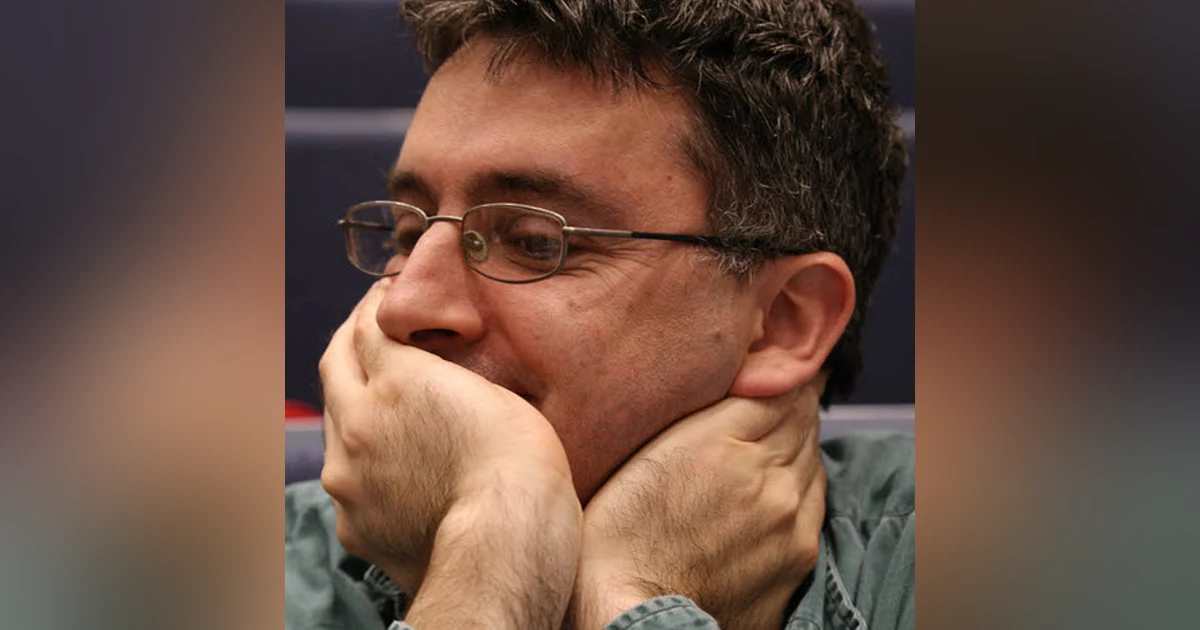
Today, Award-winning Translator and editor Daniel Hahn is talking about his approach to translations, Evaluating a work of translation and his translation of the Portuguese novel 'Resistance' by Julian Fuks.
Daniel Hahn is a writer, editor, and translator with around a hundred books to his credit. His work includes translations from Europe, Africa, and the Americas (encompassing fiction, nonfiction, children’s books, and plays) and many nonfiction books, including The Oxford Companion to Children’s Literature.
Hahn was appointed as Officer of the Order of the British Empire (OBE) in the year 2020 for his services to literature.
He has won the Independent Foreign Fiction Prize, the International Dublin Literary Award, and the Blue Peter Book Award. He has been shortlisted for the Man Booker International Prize, among many others. He won the 2023 Ottaway Award for the Promotion of International Literature.
To buy Daniel's wonderful translation of 'Resistance' -
https://amzn.to/3R1vBme
More about 'Resistance': The novel -
https://bit.ly/hahnresistance
To know more about Daniel Hahn's impressive body of work -
https://bit.ly/Danielhahn
About SALT:
https://bit.ly/SouthAsianLit
For your feedback:
https://bit.ly/3NmJ31Y
Harshaneeyam on Spotify –http://bit.ly/harshaneeyam
Harshaneeyam on Apple podcast –http://apple.co/3qmhis5
*Contact Email: harshaneeyam@gmail.com
***Disclaimer: The views and opinions expressed by Interviewees in interviews conducted by Harshaneeyam Podcast are those of the Interviewees and do not necessarily reflect the official policy or position of Harshaneeyam Podcast. Any content provided by Interviewees is of their opinion and is not intended to malign any religion, ethnic group, club, organization, company, individual, or anyone or anything.
This podcast uses the following third-party services for analysis:
Podtrac - https://analytics.podtrac.com/privacy-policy-gdrp
Harshaneeyam · Episode Transcript
A Conversation with Daniel Hahn - Literary translator, editor, and author
Daniel Hahn is an award-winning translator and editor with around a hundred books to his credit. His work spans translations from Europe, Africa, and the Americas, encompassing fiction, children's books, plays, and nonfiction — including the Oxford Companion to Children's Literature. In 2020, he was appointed Officer of the Order of the British Empire for his services to literature. In this episode, he speaks about his approach to translation, how literary work is judged, and the Portuguese novel Resistance by Julián Fuks, which he translated. You can buy the novel using the link in the show notes.
Harshaneeyam
Good evening, Daniel. Welcome to Harshaneeyam.
Daniel Hahn
Good evening — or good afternoon from here. It's lovely to be here.
Harshaneeyam
How did you end up choosing a career in translation?
Daniel Hahn
The idea of 'choosing' a career in translation isn't quite right for me. I started translating by accident — I wasn't planning to be a translator, but a publisher I was working with asked me to translate something, and I said yes. So I don't feel like I ever chose it; I stumbled into it. I was in a position to stumble into it partly because I had considerable competence in other languages. My mother is from Brazil and my father from Argentina. Even though I only spoke English with my parents, I had Portuguese and Spanish in my ears my whole life. I've always had the habit of engaging with those languages — I never spoke them much, but I was surrounded by them and I read them very comfortably. I also translate from French, though my French comes from conventional schooling. Because I had Portuguese and Spanish at a high passive level, I was in a position to give translating a try. And then it turned out to be quite fun, and I think I was quite good at it in that first commission. So here I am, many years and many books later — slightly surprisingly.
Harshaneeyam
A natural inclination for any translator would be to gravitate toward literary fiction, but you have done a great deal of work in children's literature too.
Daniel Hahn
Children's books are a funny one for me. I've been interested in them since I was a child, and I don't think that interest ever stopped. When I began working in my twenties, I did various small jobs connected to children's books that had nothing to do with translation. So through my twenties I wasn't really translating at all — I was working with children's books and writing a little. It took quite a long time for the translating and the children's books to come together; they ran in parallel for a while. Only after some years did I get into a position where I could translate children's books as well. Picture books in particular are, I think, my favourite kind of translation. It feels like a lovely marriage of my two passions — translation and children's literature.
Harshaneeyam
Is there a strong market globally for English translations of children's literature?
Daniel Hahn
It's difficult, actually. The English-speaking world produces a great deal of excellent children's writing — from early picture books through to young adult fiction — and we are a very good exporter. You find British, American, Irish, Canadian, Australian, and New Zealand writers and illustrators in bookshops and libraries all over the world. Getting work in the other direction — from other languages into English — is a much harder proposition. That's true of adult books too, but the imbalance is far more extreme with children's books. So even though I love doing children's books, I don't do nearly as many as I'd like. I'm limited by how much demand there is.
Harshaneeyam
You set up an award for literary translators and editors. What was the thinking behind it?
Daniel Hahn
This is a prize I set up with the Society of Authors and the Translators Association in the UK, about six or seven years ago, called the TA First Translation Prize. It's a debut translator prize — and translation is a difficult profession to break into. Getting your first job is hard, and sustaining a career even after that is hard. I wanted a prize that recognised a translator at the very beginning of their career, offering encouragement to a shortlist and a small monetary award to a standout debut translator each year. But I also wanted to recognise the role editors play in making those debuts happen. I borrowed the idea from a prize that exists in the UK for debut children's fiction, the Branford Boase Award, which splits between the debut author and their editor. The TA First Translation Prize works the same way — split between the translator and their nominated editor — because it's not only hard to get your first translation job and do it brilliantly; it also takes an editor willing to take a risk on a first-timer and work closely with them to make the book as good as it can be. Translators are often underappreciated, as people frequently point out — but I think editors are even less acknowledged. They're often not named at all, yet they can have a quite significant role in a book achieving its potential.
Harshaneeyam
You were also involved in a project called SALT — South Asian Literature and Translation. Could you tell us about it?
Daniel Hahn
The SALT project was just set up and launched earlier this year. It's aimed at encouraging the production and promotion of literature from South Asian languages, translated into English and published outside South Asia. There's a great deal of writing by Indian writers, for example, that gets translated into English and published in India, but there's a real difficulty getting those writers from an Indian publisher to a publisher in the UK or US. You may have spoken to Daisy Rockwell on this podcast — she won the International Booker with Geetanjali Shree's Tomb of Sand, the first time any South Asian book had even made the shortlist of that prize. Both Geetanjali and Daisy had been working for a long time and are extraordinary, but getting South Asian work to other parts of the English-speaking world remains very difficult. SALT is based at the University of Chicago. I'm running it with my friend Jason Grunebaum, who teaches Hindi and translation there. It aims to support every link in the chain that takes a book from a writer in South Asia to a reader in the English-speaking world. That means mentorships and sample grants for translators, travel grants, translation and promotional support for publishers, a summer school for translators, and more. We've just opened our publishers' travel grant application window, and we're announcing our first wave of translator mentorships shortly. There's a lot of information on the SALT website at the University of Chicago.
Harshaneeyam
Is the window for applications still open?
Daniel Hahn
The grant currently open is for publishers in the English-speaking world outside South Asia who want to travel to South Asia — to meet publishers, attend festivals, visit bookshops, and find exciting things to publish. Then, for translators, the first opportunity to open will be the mentorships. ALTA, the American Literary Translators Association, will be running eight South Asia–specific mentorships as part of their programme this year.
Harshaneeyam
When it comes to judging a translation for an award, I've often wondered how it works. Do the judges get to read the original? What is the process like?
Daniel Hahn
It depends on the prize. Some prizes are limited to translations from specific languages, so it's possible to find judges who can read both and assess the translation directly against the source. But most of the time that isn't what's happening. Most of the time, a translation is being judged on how it works as a piece of English — essentially the way any reader would judge it. If you buy a translated book in a bookshop, you don't ask yourself what relationship this bears to the original. You ask: what is the prose like? Are the jokes funny? Can I hear the voices? How interesting is what it's trying to do, stylistically or formally or thematically? So many prizes are looking at translations as works of English — and sometimes alongside books originally written in English. The Dublin Literary Award, for instance, judges translations and English-language originals together: you're simply judging a large number of novels and acknowledging, where relevant, that more than one person got a book to that point. The International Booker is different — it receives submissions translated from many dozens of languages, and the judges won't be comparing them in terms of source texts. They're reading perhaps a hundred books in English and choosing the most accomplished, the most interesting, the most ambitious. If a translated book rises to the top on all of those levels — in texture, voice, sound — then two people need to be recognised for it. But fundamentally you're not looking for something very different from what you'd look for in a book originally written in one language.
Harshaneeyam
Would a translation dealing with a particularly timely issue — say, a book about the war in Ukraine — have any added advantage when being judged for a prize?
Daniel Hahn
I don't think so, or at least I'd hope most juries would try to compare like with like rather than rewarding a book because its subject happens to be in the news. That said, as a reader it's genuinely quite hard to separate those things sometimes. If you're already emotionally engaged with a story, that will colour how you experience it. There will always be some bias, however hard you try to avoid it. It probably varies a great deal from prize to prize and jury to jury — and what's interesting is that many of these prizes, including the very large ones, don't have detailed criteria. It's often left to the jury to decide what they're looking for, and that can shift from year to year.
Harshaneeyam
So all the judges come together and collectively decide what they're looking for?
Daniel Hahn
Yes — because you have to. Imagine you can't agree on what 'best book' means, and you've narrowed it down to two possibilities. One is quite short, exquisitely put together — flawless, like a perfect piece of writing, if such a thing can exist. The other is six hundred pages, not flawless in quite the same way — it's too ambitious and complex for that — but it's astonishing, and you can forgive small imperfections because it's attempting something so much more difficult. Either of those could win the prize, depending on what the group values: impeccable prose and precision, or formal and stylistic ambition. Neither is better than the other; they can both be extraordinary, just in wildly different ways.
Harshaneeyam
As a professional translator, how much freedom do you have in choosing which works to translate?
Daniel Hahn
In one sense, I almost always get to choose — I work as a freelancer, so I decide which contracts I sign and which I don't. I'm not under contract to a publisher and being handed the next thing they require of me. That doesn't mean unlimited choice, but it means there's some degree of negotiation in how I arrive at a book. Sometimes I tell a publisher about something I think they should be interested in. Sometimes they come to me with a book they think I'll want. Often it grows out of a long conversation, sometimes over years. There are occasions when I'll translate something I don't completely love because there's a gap in my schedule and I need to be working. But I'm lucky that for the most part, I've translated books I genuinely love — books that I feel excited about and able to do something I'm proud of.
Harshaneeyam
So how exactly do you choose a particular book to translate?
Daniel Hahn
Part of it is finding things I like, or having things I like introduced to me — which is as hard to pin down as it is for any reader. You can predict a little what you'll respond to, but you can never be absolutely certain. There's also the practical question: I'm not being commissioned to read this book for a day; I'm being commissioned to live inside it for three months. I need to feel able to do it — to connect to it, to hear the voice in English. The books I've worked on span a really wide range of styles; I think it would be very difficult to identify a 'Daniel Hahn type' of book.
Harshaneeyam
Are there any categories you won't touch?
Daniel Hahn
I don't translate poetry very much, though I have done a couple of collections. Otherwise I don't have strict rules. Most of what I translate is probably adult literary fiction of a certain kind, but if something very different appeals to me, I'll take it on. I've done a fair amount of nonfiction across a very wide range. This year alone I have several picture books, a few novels, a short story collection, a nonfiction essay collection, and a book about lighthouses — none of which have much in common except that I like them all and I like something about the way they're written, not just what they're saying. They're all things I'm happy to spend time with and able to do something I'm proud of.
Harshaneeyam
Many books contain cultural references — pop culture, films, food — that are specific to a particular region. How do you handle that, given that readers may not be familiar with them?
Daniel Hahn
I don't always solve it. Sometimes I simply leave things as they are and I'm entirely comfortable with the idea that readers will sometimes not understand. If I read a novel written in English by a writer from India or Detroit or Johannesburg or Auckland, I'll often encounter things — singers, newspapers, politicians, kinds of food — that sit in a cultural framework unfamiliar to me. And I don't think it's always essential to explain everything. There are cases where it matters — where a reader in the source country would automatically understand that a character eating a particular food signals something about their socioeconomic background, for instance, and that meaning is significant to the book. In those cases I'll find a way to quietly smuggle in that information. But much of the time it's not significant. And increasingly, as I get further into this work, I'm comfortable letting readers not know everything — just as they wouldn't know everything if they were reading a book originally in English. If they're desperate to know who a particular singer is, they can look it up.
Harshaneeyam
Your book about the translation process, Catching Fire — it's beautifully written. It includes a lengthy discussion about translating titles. Why does a translator need to be so deliberate about titles?
Daniel Hahn
Because it's important to be careful about titles when you're writing, and translation is no different. A title needs to do many things at once. As author or translator, you want it to represent the work in some way — to distil it, or tease it, or suggest something about it. But it's also going to be printed on the front cover, the spine, in catalogues and bookshops, and it's a marketing tool. So it's not enough for the author or translator to love it; the publishers need to be comfortable with it too, and everyone involved in sales and publicity needs to be able to work with it. A title has to work very hard. The one way in which it's slightly different for a translator is that there's a kind of default: there was already a title in the source language. So you have to think more deliberately about whether to stay close to that, or construct something that might be similar, or might be radically different, but which will do all of the things a title needs to do — be memorable, sound good, and ideally be short.
Harshaneeyam
When you begin translating a book, what does the process look like? And how closely do you work with the author?
Daniel Hahn
My process is fairly consistent. I tend to do first drafts very quickly — they're usually quite bad, but they're quick. Getting a rough first draft down as fast as I can means I'm also discovering the book as I go. Then I revise, and revise again, and keep going over the surface until I have something I'm satisfied with. I often start translating without having read the whole book first. I don't enjoy first drafts much, but I do enjoy all the revising that follows — so my process is weighted toward the parts I find enjoyable. As for the author, almost all of mine have some kind of engagement with the translation process. At minimum, that might mean answering a few questions. If their English is strong, they might read an entire draft and comment on it, and we might go back and forth quite a lot. I always give authors the opportunity to be as involved as they want to be, and I always welcome it. It's invariably illuminating.
Harshaneeyam
Resistance is written by an Argentine author. Can you take us through the state of contemporary literary fiction coming out of Argentina?
Daniel Hahn
Julián Fuks — the author — could be called an Argentine writer or a Brazilian writer, and either would be a partial description. He's lived his whole life in Brazil, his parents are from Argentina, and he writes in Portuguese. He belongs to what I think is a remarkable generation of writers in Brazil and Argentina — writers in their late thirties to early fifties — often the generation after those who fought against military oppression, or one generation after the migrants and the refugees. Several of the writers I've been lucky to translate are from that generation. Julián deals specifically with the legacy of his parents' experience as militants fighting military rule, and with what it means to carry those silences and histories forward. What's as exciting as the writers themselves is that they're now being recognised worldwide. Latin American fiction in translation has a real global presence today that didn't exist a couple of decades ago. A lot of that is thanks to publishers like Charco Press in Edinburgh, who publish only Latin American fiction in English translation. They alone have introduced many writers from Argentina, Brazil, Colombia, and elsewhere to English-speaking readers. In a way, they were able to take advantage of the fact that there were so many remarkable writers in Latin America who simply didn't yet have publishers in the English-speaking world.
Harshaneeyam
Could you introduce Resistance to listeners who haven't read it yet?
Daniel Hahn
Resistance is what we'd probably call autofiction — it closely maps certain contours of the author's own biography. Very roughly: Julián's parents left Argentina before he was born; he was born in Brazil. They adopted a child, so he has an adopted brother. The book is, among many other things, Julián's attempt to think about his parents' experience as militants in Argentina before he was born, to think about his brother's experience of being adopted into that family, and to explore the silences that settle in families like this — stories that slightly resist being brought out into the light. The title refers to several things at once: political resistance, yes, but also the resistance of certain memories and stories to being told. Publishers sometimes use the word 'quiet' as though it were an insult, but this is a very thoughtful, meditative, beautifully written, economical book — not self-indulgent, but extraordinarily careful, full of insight. It doesn't have fireworks. Some things happen — the narrator travels to Argentina, meets people, sees places — but it's not driven by plot. It's so delicate, and I think it genuinely gets under your skin.
Harshaneeyam
Delicate is exactly the right word for the book. There's also a recent Argentine film, Argentina, 1985, which was nominated for Best Foreign Language Film. I felt Resistance deals with some of the aftermath of what that film depicts.
Daniel Hahn
Argentina, 1985 looks at some of the people who were part of Argentina's military rule — including Jorge Rafael Videla, who led the country for many years. So it's a different aftermath to the one Julián is writing about, but there's a real overlap. Interestingly, I have a book coming out next week that overlaps with the film in striking ways — it's called Confession, by a writer called Martín Kohan, published by Charco Press. It deals closely with Videla as a character, and the scenes in Argentina, 1985 where the lawyer played by Ricardo Darín gives his great speeches — Videla is one of the figures in the dock, a very grim presence. He features in Confession in very clever, unsettling ways that I won't spoil. The book is set partly in the mid-twentieth century when Videla was a young man, partly during his rule, and partly in the present when he has been consigned to history. I was in the middle of working on Confession when I saw Argentina, 1985, so the two became somewhat fused in my mind.
Harshaneeyam
You've also translated another of Julián's books — Occupation. Could we say that Confession, Resistance, and Occupation form a kind of trilogy?
Daniel Hahn
It's an interesting question. Julián and I had been talking about Resistance and Occupation as perhaps the first two parts of a trilogy, hoping he would write a third. But maybe I now have to write to him and say: I'm sorry, we've had to complete your trilogy with Martín Kohan's book because we got tired of waiting! Resistance and Occupation are such an interesting pair, and whatever Julián does next — related or not — will make a fascinating third. Confession doesn't really overlap with them stylistically or formally, but it certainly covers some of the same historical ground, approached in a very different way.
Harshaneeyam
Who is publishing Confession, and when is it out?
Daniel Hahn
It's a Charco Press book, out on the fifth of September — so essentially right now.
Harshaneeyam
Interestingly, you have an Argentine connection of your own — your father is from Argentina.
Daniel Hahn
Yes — I've never actually lived in Argentina, and I've spent very little time there. I go to Brazil, where my mother is from, very often; I go to Argentina rarely. But my father is from there, and I grew up hearing him and his friends speaking. What's more, not only is my father Argentine, but both of my parents are psychoanalysts — as are Julián's parents, both in the novel and in reality. So there are two of us, roughly the same generation, with Argentine-Brazilian psychoanalyst parents. There were lots of small references in the book that I recognised from my own life. And I think our parents will have been part of the same circles — I believe Julián's parents and my parents actually met in the 1970s, before any of us were born. So out of all the books I've translated, this is the one where the narrator's autobiography overlaps most closely with my own.
Harshaneeyam
Were there specific passages in the translation that required a great deal of time and attention?
Daniel Hahn
Julián's writing is so careful and precise that every sentence requires many drafts to get right. What I ended up doing with this book was working for a very long time on the opening six or eight pages — longer than usual, and in unusual circumstances. I translated the opening passage long before I translated the rest of the book. It was needed first for Julián to read at a public event, then for a magazine extract, then for other purposes. So I had about two years with just that opening, going back and returning to it, before the main translation project officially began. I'm very pleased with how it sounds. That's the section I know most intimately of all.
Harshaneeyam
I found the style of the novel very distinctive. Whenever the narrator speaks of the past — events his parents experienced before he was born — he goes beyond what was simply told to him. He starts filling in the gaps, speculating, imagining. I found that very interesting.
Daniel Hahn
It's also something which, in a funny way, isn't especially difficult for a translator — if anything, it makes things slightly easier. Whoever is telling the story, it's always really him. There aren't twenty pages narrated by his mother, or his father, or his brother; it's always Julián, either speaking as himself or paraphrasing and, as you say, filling in the gaps — telling his version of their version of someone else's version of the story. So it isn't one of those books where you need to create many distinct and coherent voices. The prose is very consistent — not just in this book, but in Occupation as well. In a way, that process whereby stories from other people get absorbed into his own telling actually helps a translator, because there's one vocal thread that runs from the first word to the last, and it's remarkably steady in rhythm and tone.
Harshaneeyam
In the novel, it sometimes feels as though the brother suffers more than the narrator himself. If the narrator had been the brother instead, how different would the novel have been?
Daniel Hahn
Completely different — partly because the experience would be so different, but also because I think Julián would be deeply uneasy about that presumption. One of the things Occupation is actually about is how to tell other people's stories without appropriating them. In Resistance, Julián is scrupulously careful about acknowledging the gap between his perspective and the experiences of those around him. He speculates, yes — but he speculates because he can't do anything other than that. He's always going to be on the outside of his brother's story. To have written it from inside that story would have been a very different kind of claim, and I don't think it's one he'd have wanted to make.
Harshaneeyam
We're coming to our last couple of questions. If you had to define a code of ethics for translators, what would it look like?
Daniel Hahn
I'm not sure it's my place to dictate what translators should or shouldn't translate, or exactly how they should translate. But one thing I do talk about especially with new translators is the importance of deliberateness — of being intentional in your choices, whether about what you take on or how you handle it. The things I'm least proud of in my own work are not decisions I regret making. They're moments where I wasn't really making a decision at all — where I did something easily, without being deliberate about it. I was at a panel at the Edinburgh International Book Festival a few days ago with writers whose books are in various ways about language, and we ended up talking a great deal about deliberateness, care, and the desire to genuinely understand. We also talked about humility — not in the sense that translators should be self-effacing or servile, which I firmly don't believe. But in the sense of not wanting to dominate a text, not wanting to turn it into something you think is more important than the author made it. Approaching a text with a genuine, serious desire to understand it — which sounds obvious, but is perhaps a bit more radical than it seems.
Harshaneeyam
Beautiful. Finally, what are you currently working on?
Daniel Hahn
The next thing out is Confession by Martín Kohan, followed by a book about lighthouses coming out in October. I'm currently translating a Brazilian novel for Charco Press by a writer called Antônio Xerxenesky. After that, Tom Bunstead — a brilliant translator from Spanish — and I are co-translating a new book by the Spanish writer Juan José Millás, called, I think, Only Smoke in English, though Tom and I haven't fully settled the title yet, and as you know, titles matter. Beyond the actual translating, this is the time of year for literary festivals, a great deal of travelling, and the SALT project. So the translating will take a little longer than usual over the next few weeks — there are rather a lot of things pulling me away from the desk.
Harshaneeyam
Thank you so much, Daniel. As expected, a wonderfully interesting and insightful conversation. Thank you.
Daniel Hahn
It's been a real pleasure. Thank you for having me.