

Ann Morgan on 'Relearning to Read!'


Key Takeaways
- Ann Morgan's book, 'Relearning to Read: Adventures in Not-Knowing,' challenges traditional notions of reading by encouraging listeners to embrace incomprehension as a gateway to deeper appreciation of global literature.
- Morgan shares her transformative journey from her ambitious 'Reading the World' project, where she aimed to read a book from every country, highlighting literature's power to bridge divides.
- The podcast explores how accepting limitations in understanding diverse literatures can actually enrich our reading experience and broaden our perspectives.
- Listeners are encouraged to step outside their comfort zones and engage with unfamiliar literary traditions, fostering a more adventurous and inclusive approach to reading.
- Ann Morgan's work emphasizes the importance of translators and the vital role they play in making world literature accessible to a wider audience, aligning with Harshaneeyam's core focus.
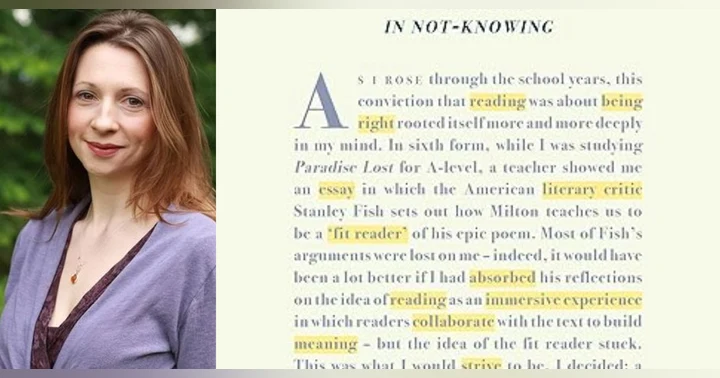
Today on Harshaneeyam podcast we are thrilled to speak with author Ann Morgan about her new book, Relearning to Read: Adventures in Not-Knowing.
While many books about reading focus on comfort and coziness, Ann’s latest work takes a refreshing, different approach. The book is built on the realization that if we want to truly read widely, we must first make friends with our own incomprehension. Ann argues that since no one can possibly be an expert in every literature from around the globe, we should embrace our limitations. By getting comfortable with discomfort, she suggests we can actually deepen our appreciation for the world’s richness.
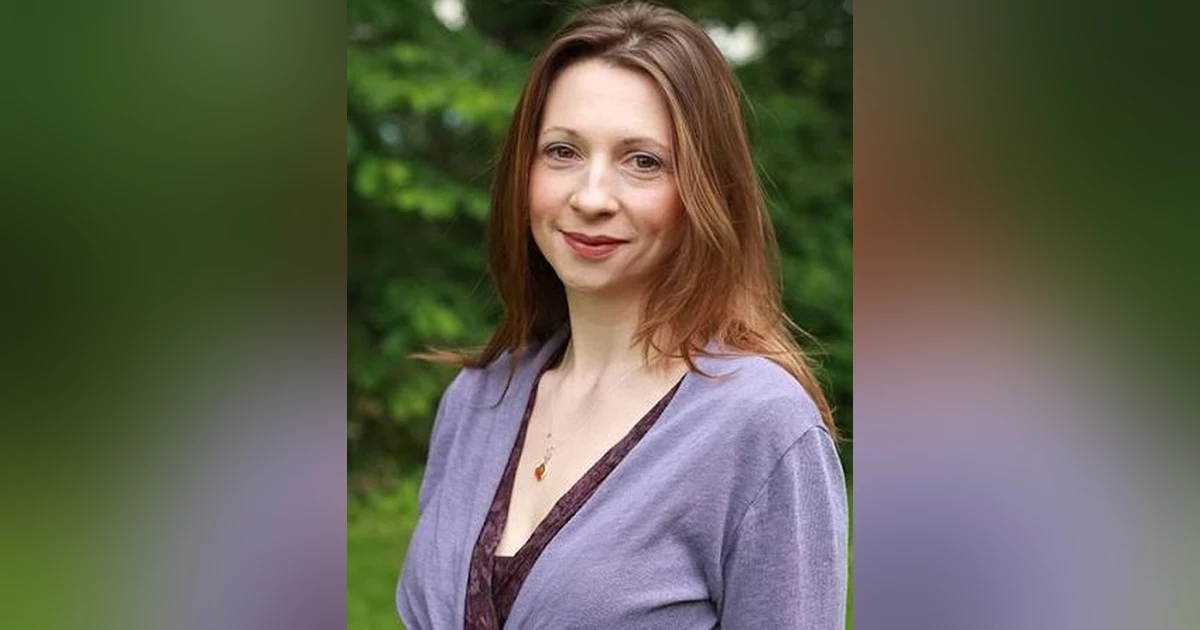
Ann Morgan is a talented writer and editor who has already published two critically acclaimed books. Her first book, Reading the World: Confessions of a Literary Explorer, was born from a massive personal challenge.
In 2012, she embarked on a quest to read at least one book from every single country on Earth. That project began as a simple blog but quickly grew into something much more profound. Through this journey, Ann connected with readers, writers, translators, and literary organizations across the entire planet.
She personally experienced the transformative power of literature during this time. She learned firsthand how stories have the potential to bridge cultural, political, and religious divides.
Even today, Ann continues to share her passion for international literature at ayearofreadingtheworld.com.
Her unique literary journey has even been featured in a TED talk, inspiring many others to start their own ventures. Beyond her writing, Ann currently sits on the funding panel for English PEN’s PEN Translates program. She has also helped curate longlists for several major literary prizes over the years. This includes her work with the Commonwealth Foundation’s short story prize and the FT/Oppenheimer Funds Emerging Voices awards.
Ann is also a frequent speaker on the topic of international literature both within the UK and abroad. She is a familiar face at numerous literary festivals around the world.
We are honored to host her today to discuss her adventurous approach to reading.
If you enjoy Harshaneeyam Podcast please follow the show on Apple, Spotify, or your favourite podcasting platform and leave a review for us. It will help truly help us; and don't forget to Share our podcast link with your other friends who enjoy similar content.
To help us provide even more value, using the link given below in the show notes to complete our brief Listener Survey. Your feedback is the secret ingredient that helps us improve and create content tailored to your interests!
https://www.harshaneeyam.com/survey/Listener/
* Please complete Harshaneeyam Listener Survey using the above link.
It would be lovely to have your feedback.
***Disclaimer: The views and opinions expressed by Interviewees in interviews conducted by Harshaneeyam Podcast are those of the Interviewees and do not necessarily reflect the official policy or position of Harshaneeyam Podcast. Any content provided by Interviewees is of their opinion and is not intended to malign any religion, ethnic group, club, organization, company, individual, or anyone or anything.
This podcast uses the following third-party services for analysis:
Podtrac - https://analytics.podtrac.com/privacy-policy-gdrp
Frequently Asked Questions
What is Ann Morgan's new book about?
Ann Morgan's new book, 'Relearning to Read: Adventures in Not-Knowing,' explores the idea of embracing incomprehension to better appreciate diverse world literatures.
What was Ann Morgan's 'Reading the World' project?
Her 'Reading the World' project was a personal challenge to read at least one book from every country on Earth, which began as a blog and evolved into a significant exploration of global literature.
How does Ann Morgan suggest we approach reading unfamiliar literature?
Ann Morgan suggests we should get comfortable with our own incomprehension and limitations, viewing them not as barriers but as opportunities to deepen our appreciation for global stories.
Where can I learn more about Ann Morgan's work on reading?
You can find more about Ann Morgan's passion for international literature and her ongoing work at ayearofreadingtheworld.com.
H: (00:00.462)
Today on the Harshnim Podcast, we are thrilled to speak with author Ann Morgan about her new book, *Relearning to Read: Adventures in Not Knowing*. While many books about reading focus on comfort and coziness, Ann's latest work takes a refreshingly different approach. The book is built on the realization that if we want to truly read widely, we must first make friends with our own incomprehension. Ann argues that since no one can possibly be an expert in every literature from around the globe, we should embrace our limitations by getting comfortable with our own discomfort. She suggests we can actually deepen our appreciation for the world's richness. Ann Morgan is a talented writer and editor. Her first book, *Reading the World: Confessions of a Literary Explorer*, was born from a massive personal challenge.
In 2012, she embarked on a quest to read at least one book from every single country on Earth. That project began as a simple blog but quickly grew into something much more profound; through this journey, she connected with readers, writers, translators, and literary organizations across the entire planet. She personally experienced the transformative power of literature during this time. She learned firsthand how stories have the potential to bridge cultural, political, and religious divides. Even today, she continues to share her passion for international literature at www.ayearofreadingtheworld.com. Her unique literary journey has even been featured in a TED talk, inspiring many others to start their own ventures. Beyond her writing, she currently sits on the funding panel for English PEN’s *PEN Translates* program. She has also helped curate longlists for several major literary prizes over the years. She is also a frequent speaker on the topic of international literature both within the UK and abroad, and she is a familiar face at numerous literary festivals around the world. We are honoured to host her today to discuss her adventurous approach to reading.
H: (02:08.78)
Now, Ann, you have spoken about how our education often treats reading as a test of intelligence. In your journey towards what you call the "adventure of not knowing"—a very interesting adventure—how did you physically and mentally practice letting go of that need to be the "clever reader"? That is the first question.
Ann Morgan: (02:33.004)
Thank you for that question. Yes, this all came about from my quest to open up my reading, which until 2012 had been very Anglo-centric. I'm British and I live in the UK, and it was really a chance comment that made me realize that until I was nearly 30, my reading had almost always been books written originally in English. That didn't make much sense to me, so I decided to spend 2012 trying to read a book from every country in the world. And that's what I did. That included many practical challenges: fitting all that reading into my life, finding works translated from every country, and deciding what a "country" is—which not everyone agrees on, as we know if we watch the news.
But underneath all that, there was a more profound challenge: I realized the way I had learned to read, or what I expected reading was, wasn't going to work when I was trying to read internationally. I realized that my education had taught me to read by being "clever" about books: by trying to understand everything and getting the "right answer." I was very proud of being good at reading; it was my favorite subject, and I studied it at university. I was really proud of saying clever things about books and getting good marks in my exams. But what that relied on was bringing a lot of contextual knowledge to the books I read—unpacking the similes and the metaphors by knowing the context behind them. For example, knowing that in Shakespeare's day, corn was threshed in a certain way helps you understand the resonance of a metaphor. That's really enriching, rewarding, and exciting; it can be fun to do as a student.
The problem is, if you are reading internationally, regardless of how many languages you speak or how many countries you've been to, there will come a point where you don't understand something, or where you can't be certain about the context. You can't be certain about whether something is a joke, or whether a character's action is strange in their society or just standard for a person their age in that situation. You can't be certain. Because I was doing this eccentric project where I was trying to read 197 books in a year and blogging about them, I felt very responsible because I had people all around the world following and helping me—sometimes suggesting things or even translating a whole book for me. I felt responsible to write carefully and thoughtfully. But I suddenly realized that maybe I wasn't going to know what I was talking about. I might sound stupid; I might get lots of things wrong. So, I realized the only way I could deal with that—the only way I could honor this project—was by being honest about my limitations, being open to being corrected, and being open to changing my views. Sometimes, I had to be comfortable with not understanding, and perhaps never understanding everything—being comfortable with the fact that not everything can be Googled, not everything can be researched, and some questions may never be fully answered. That was how I started, but it was like learning a new physical discipline; it was a muscle I had to train. It was very uncomfortable, and it still is at times. But I had to get used to that uncertainty, that "wobbly" feeling of, "Gosh, I really don't know what is going on here," and spend time with that to see what it taught me about myself and my conditioning.
H: (05:42.862)
Wonderful.
Ann Morgan: (06:05.25)
...but it was like learning a new kind of exercise or a new sort of physical discipline, and that it was a bit like a muscle that I had to train. It was very uncomfortable and it still is uncomfortable at times. But I had to get more and more used to that uncertainty, that "wobbly" feeling of, "Gosh, really, I don't know what is going on here." And spending time with that, thinking about that and seeing what that taught me about myself and about my conditioning—my reading historically.
H: (07:30.126)
So, you mean to say by embracing things that you don't understand and accepting that you don't understand, it made you a better person, or a better reader, or both?
Ann Morgan: (07:45.794)
I think both. I'd like to think both. I can't really comment on whether I'm a better person, but I think I probably am a better reader in that regard. But I'm also a better reader of myself. I think this is an interesting thing to learn by taking this approach. I learned to pay more attention to my own biases, my own conditioning, and the assumptions that I make—which I often probably didn't realize I was making. Now, none of us is entirely self-aware; none of us can step outside our own heads and see ourselves entirely. But I think we can become more self-aware, more conscious, more mindful of the patterns that we follow and the habits that we have.
When you start to pay attention—and I think often, certainly in the educational tradition that I was raised in—the idea of not knowing the "right answer" would often feel like a shameful thing. It would feel like a failing or a fault—something to be embarrassed about. And so I think many people, myself included, when we don't understand something, we may often hide this from ourselves by getting irritated, by telling ourselves, "There's something wrong with this book. This is badly written, or it's not for me." We blame the book, not ourselves. Actually, starting to learn that when I feel that flash of irritation—well, maybe sometimes it might be a badly written book, but maybe more often it might be that there's something in me that is struggling, that is maybe threatened by what I'm reading or challenged by it because it's not behaving as I expect it to. That's interesting. Asking yourself, "Why does that bother me so much? Why am I feeling irritated by that? Why should this character behaving in this way be problematic for me?" That's interesting when you start to pay attention to that and to unpick what might be in my background or my education that has made me find this difficult.
H: (09:55.894)
No, not understanding a book based on your background or culture and not being able to enjoy reading that particular book—how do you differentiate? Because sometimes, as you said, some things which we don't understand, we don't enjoy. So how are you able to differentiate it now, clearly?
Ann Morgan: (10:16.938)
It requires energy to sit with not knowing; it requires effort. I would certainly say there are times when I seek comfort, as I'm sure we all do. I seek familiarity.
H: (10:33.17)
It happens to me even in the books that I read in my mother tongue, Telugu. That's the reason I asked it. It can happen not only with literature in translation, or when you are reading in a language other than your mother tongue, but like you said, completely in literature in translation where you are reading books from a totally different culture.
Ann Morgan: (10:56.994)
Yes, I think that's really important. I mean, I'm an English speaker. English is one of the most diverse languages, in that there are many "Englishes."
H: (11:09.93)
Even within the UK, I gather.
Ann Morgan: (11:11.982)
Even within the UK, absolutely. The sort of English that I speak, once upon a time, was called "Received Pronunciation," which to me sounds like a very lofty term—which seems to imply that this way of speaking was given down by the gods or something. Nowadays, actually, the way that I speak, most people who speak English around the world don't speak English like me. There are far more speakers of Indian English than there are of British English. So really, if we're talking about ownership, I'm in the minority of English speakers. And I think that's really interesting because we don't have the same idea of hierarchy about good and bad Englishes—it's just different Englishes. I mean, some of those old prejudices still exist, but it's a much richer space.
H: (12:03.842)
They do exist, yes.
Ann Morgan: (12:09.708)
Well, but it means that there are many stories written in English that may be quite unfamiliar to me in terms of the way they use the language and the world that they inhabit. It's definitely not just a case of translated literature. Even something written in a very familiar style may present challenges. The truth is, this is not to say that no book is bad. There are badly written books. I'm sure you, as a wide reader, know this as well. Sometimes when we feel that irritation, it is well-placed because something isn't working well as a story. But what I think is the case when I read something—particularly when I'm aware it comes from a tradition that is unfamiliar to me—is that I should be more conscious that when that flash of irritation occurs, there's a higher chance that it says something about me than about the book. I should be less quick to jump to a judgment that I might make if I were reading something from a more familiar world.
And I think it's really interesting, because part of that irritation comes from when you are not the reader that the writer expects. Every writer writes for an imagined reader. Some writers almost write for themselves or a reader who is like themselves. In my book, *Relearning to Read*, I play with that idea a little bit and talk about writing for a reader who is like me and imagining what that person will think of what I'm writing. Some writers may, depending on the political situation or their society, write for a particular class of person or people with particular views. But there will always be an expected reader. And when you're not the reader that was expected, you don't quite fit. There's a gap between what you're expected to know and what you actually know. That's an interesting experience when you find yourself at a distance. It's sometimes like eavesdropping on a conversation; you hear things that you'd never hear if you were actually in the room.
Particularly as a British reader, with the colonial history, the British Empire is certainly not viewed in warm terms in many places. There are many stories not written for British readers that write in ways that perhaps, if they were writing for a British audience, they wouldn't be written that way. That was eye-opening for me as someone educated in a country where, to be honest, the Empire wasn't really discussed, or if it was, it was discussed in broadly positive terms as a "civilizing influence" that brought the railways, while atrocities like the Amritsar massacre, the Bengal famine, or the torture in the Mau Mau rebellion were never mentioned. So for me as a British reader, reading books not written for me and eavesdropping on conversations that discuss these things—that was a huge education, and a very uncomfortable one at times. But I think it has made me a better reader.
H: (16:05.518)
You talked about embracing things which you don't understand and trying to understand what they are. And you developed this fascinating concept called "incomprehension workshops." Please tell us more about it.
Ann Morgan: (16:20.75)
Well, when I was at school, one of the things that was very common in English literature classes—and I think in many classes around the world—was the "comprehension exercise." You would be given an extract of text, usually a paragraph, and asked questions: "What does this word mean?", "Rewrite this sentence," "Explain what's going on." Of course, that demonstrated useful things about how the student was engaging with the text. But the problem was that it carried the implication that there was one right way of reading something, and if you couldn't explain everything in a text, you were failing. As we've discussed, when you read internationally, whoever you are, you cannot be certain that you will understand everything.
So, I decided to turn that idea upside down. In an "incomprehension workshop," I usually have about 30 people, and we have five or six extracts of text from books that are outside the comfort zone of the people in the room.
H: (17:41.62)
Could you please be more specific? Can you give an example?
Ann Morgan: (17:44.718)
Sure. Some of the pieces I often use are from a book from the Federated States of Micronesia, written by a man called Llewellyn Bernhardt. It’s one of the few books ever written by a resident of that country; it brings together myths, history, and personal recollections. It's a magical story, which many people struggle to read as literal fact, but the author may have intended it to be literally factual. We've used texts from North Korea or translations of *griot* performances in West Africa—things that the readers will probably never have encountered before. But crucially, I don't tell them any information.
H: (18:44.076)
There is no introduction, I think.
Ann Morgan: (18:45.838)
There is no introduction. They only get the chunk of text. They don't know who wrote it, where it's from—that is a problematic concept anyway, as that falls apart when you think about it—when it was published, or who translated it. They have to ask questions about it: "What does this mean?", "Does this happen?", "I don't understand this.", "I find this upsetting/offensive/surprising." By discussing these things, we start to learn what we reach for as readers when we don't understand. Reading is a collaborative process. One of the things that makes it so satisfying is that it's an active thing; you work with the writer to build the world. A good writer will leave lots of gaps in their writing.
H: (20:07.758)
More of a participative experience.
Ann Morgan: (20:09.582)
Exactly. And when you're reading a book from a background very similar to yours, you fill those gaps with things that are broadly what the writer envisaged. When you're reading a story from a very unfamiliar tradition, you may plug those gaps with all sorts of things that don't fit, which actually say more about you than about that world. We all have things we default to—things in our frame of reference. I might reach for biblical references, British history, or folk music. You might reach for family history, past stories, music you love, or any cultural things close to you. It's really interesting to see people realize, "When I don't understand something, I tend to reach for this." All of us make slightly different assumptions. Some people, if reading a text with an unnamed protagonist, will automatically assume it's a man; others, a woman. Discovering this about yourself—why did I think that?—is interesting. It goes back to learning to read yourself better. In these workshops, I hope people come away with a better idea of how they read.
H: (22:09.822)
What is the best feedback that you have received?
Ann Morgan: (22:11.854)
Well, there have been lots. I've run the workshop all over the world with people of all ages.
H: (22:22.056)
Is it online?
Ann Morgan: (22:35.598)
I do some online sessions, though it generally works best in person. There was one lovely session in the UK where I was looking at the idea of "truth." I got people to define what they thought truth was—a lot of very Western, scientific, objective definitions. There was one man in the room, a mathematician, who was very logic-based. At the end, he said, "Well, I've realized that Western science is just one prism that I look through, and I have to learn to look through other prisms in order to really appreciate all the stories in the world." I thought that was great.
H: (23:25.45)
Of course, yes. A great thing coming from a mathematician who might have spent all his life...
Ann Morgan: (23:30.686)
Indeed. I did a lovely workshop in Assam a few years ago at Dibrugarh University. The students were so lit up by the chance to play and explore. It was a joy because it was the first time I'd done the session with readers who had been educated in a very different system. It was wonderful to see these students so sparky, creative, and full of enthusiasm.
H: (24:35.63)
Wonderful. Now, we will come to your recent book, *Relearning to Read: Adventures in Not Knowing*. You cite Walter Ong's idea that all reading is a form of "internalized listening." You also mentioned that you spent a lot of your youth listening to audiobooks while knitting. How does listening to a book affect your ability compared to the visual act of reading?
Ann Morgan: (25:14.636)
I still listen to a fair number of audiobooks, although I find these days I need to choose certain types. I can't listen to literary fiction because I don't tend to focus as well when I'm listening; usually, I'm exercising or doing chores. I tend to listen to non-fiction or relatively light, plot-driven things. What I meant in that context is that listening requires you to be more instinctual in your responses. The kind of reading I had learned to do was a very intellectual, self-conscious kind of reading—drawing on knowledge, interpretation, and mental processing. It got in the way of that instinctive response that is there if you listen and pay attention.
The thing about listening is that you don't stop the story; the story continues. There isn't time to second-guess yourself. You are just following along, responding like we are in this conversation now. I'm a big believer in "deep reading"—reading things several times—which is a wonderful practice. But sometimes, stripping away that over-intellectualization—those barriers that can stop us from paying attention to those instinctive responses—is helpful. Particularly when it's a book that we can't be "clever" about because we don't have the context to analyze it, those instinctive responses are really important. That's why I think listening is a useful way of thinking about reading sometimes.
H: (27:52.76)
So, in a sense, are you saying that things we do not understand in books force us to think more about them, and in the end, we understand more about the culture and the book?
Ann Morgan: (28:06.478)
Maybe sometimes. It requires a certain humility. The listening I talk about in my book also connects to my time volunteering on a helpline in my early 20s. There were many people in emotional crisis.
H: (28:29.006)
Yes, you mentioned that in detail.
Ann Morgan: (28:31.498)
Exactly. Many of those stories were troubling and hard to understand because I was coming into someone's life in the middle of a crisis. They weren't there to explain the context; they just needed to offload. I had to go on instinct, make peace with the gaps, and sometimes finding the questions buried in what people were saying was the way to open up the conversation—to show concern and encourage them to look at things from different perspectives. That was a case of listening for things that didn't necessarily make sense to me, which proved to be the key to greater connection.
H: (29:43.648)
I am digressing a lot from the questions I sent, but let me ask: do you think that experience of listening to stories on the helpline made you a more involved reader now?
Ann Morgan: (30:06.018)
I think it made me a more humble reader. Humility is a big part of this—being aware of your own limitations, which goes hand in hand with being prepared to admit you don't understand. Being aware that maybe, because of my background and the things I've been taught, I'm not able to understand this person's perspective—or I need to sit back, reserve my judgment, and allow that voice to speak without rushing to make sense of it. That experience was very different from the educational experience I'd had, which was about making sense of things, making judgments, and being definitive. Yes, it was about humility.
H: (31:16.832)
In chapter two, you mention reading *Shalash the Iraqi*. You confessed you almost gave up because you felt it was really exhausting. Tell us about that.
Ann Morgan: (31:35.192)
*Shalash the Iraqi* is a very interesting text by an author who uses a pseudonym. It was compiled from a series of blogs written in Iraq in the mid-2000s, after the fall of Saddam Hussein, when society was crumbling, there was sectarian violence, and US troops had arrived to fill the power vacuum. These blogs were circulated online and shared secretly in Baghdad. It was a very challenging read for me, as I didn't know much about early 21st-century Iraq. It was interesting to read the translator's comments—he originally thought he would do lots of footnotes to explain everything, but he decided against it because it would be a barrier to the reader engaging with the text.
I think it was a wise decision, but it meant I had to let go of trying to be certain. Some pieces were very hard for me to make sense of; it felt slippery, like there was no foothold to grab onto. But when I stepped back, I realized there may be deeper reasons why my reading was challenged. As an English speaker closely allied with the invading forces—who are the enemies in the text—I was not the "expected reader." As someone whose culture was part of that invasion, whose media was flooded with triumphalist stories and lies, my own mind may have been affected. Perhaps there was "war damage" in my own head. We often feel distanced from terrible things happening around the world, but these things damage all of us. Depending on our cultural perspective, there are responsibilities we need to think about that may have affected how we engage with certain stories.
H: (36:19.694)
Reading is a journey. Irrespective of the stage of the journey, if you have to advise three "dos" and three "don'ts," what would they be?
Ann Morgan: (36:36.724)
Three dos and three don'ts. Okay.
1. Follow your inclinations. If you like romances, go read South American romances; if you like crime, see what crime fiction is like around the world. Use your inclinations as a guide.
2. Be open to trying things. Reserve judgment a bit longer if you're reading something from an unfamiliar tradition. Push through some initial challenges or frustrations.
3. Carve out time. If finding time is challenging, create a window—half an hour at lunch or in the morning. It's a muscle that grows the more you focus on it.
Now, for the don'ts:
1. Don't make yourself miserable by forcing yourself to read something you absolutely hate. Life's too short.
H: (38:55.342)
What is your tolerance limit? 20 pages, 30 pages?
Ann Morgan: (39:00.486)
That depends. If I'm reading for a particular reason, that's different. But don't make yourself miserable; if it's making you unhappy, it's not worth it.
2. Don't be threatened by other people's choices or comments. If you like something someone else doesn't, that's fine. If you don't like something everyone says is brilliant, that's also fine—that might say interesting things about you or the people around you.
3. Don't read introductions and surrounding text before you read the main book.
H: (40:14.261)
That's an interesting one.
Ann Morgan: (40:16.462)
I would say read it for yourself first. Many introductions are wonderful, but they put a filter over your reading. They impose a framework.
H: (40:30.52)
How you are supposed to read.
Ann Morgan: (40:44.886)
Yes, it's more important to build your own relationship with the book first, then come to the critics afterwards.
H: (40:53.774)
The book ends with the story of Tete-Michel Kpomassie.
H: (41:11.822)
He is a young man from Togo who falls in love with a book about Greenland and spends eight years traveling just to experience that unknown. In your opinion, what is the internal and physical experience of such a shift in a reader's perspective?
Ann Morgan: (41:48.76)
One of the reasons I love Tete-Michel's journey is his curiosity. There are two kinds of curiosity: "good curiosity" and "bad curiosity." Bad curiosity is a kind of voyeurism—a superior, anthropological approach that treats others as artifacts to be studied to shore up our own reputation or give us clever things to say; it’s essentially extractivist. Good curiosity is about being ready to be changed by what you learn. It's about exchange and sharing your own humanity.
When Tete-Michel went to live with the Inuit in the 1960s, he was humble. He took on their culture, shared his own stories, and built meaningful relationships. He told me about a French ethnologist he met in Greenland who came to study the Inuit but spent his time eating his crates of European tinned food, making notes, and staying in his hut. Whereas Tete-Michel lived with the Inuit, slept on their platforms, hunted with them, and ate their food—even when he struggled to appreciate it at first. That is the difference: the willingness to engage on an equal footing, to celebrate humanity with openness and joy, and a readiness to be changed. That is a transformative thing. The most interesting people I've encountered are those willing to continue growing, reassessing, and learning, and who are not fixed in their opinions. Not knowing encourages a readiness to have your mind changed at times.