Trnslating Marie NDiaye with Jordan Stump
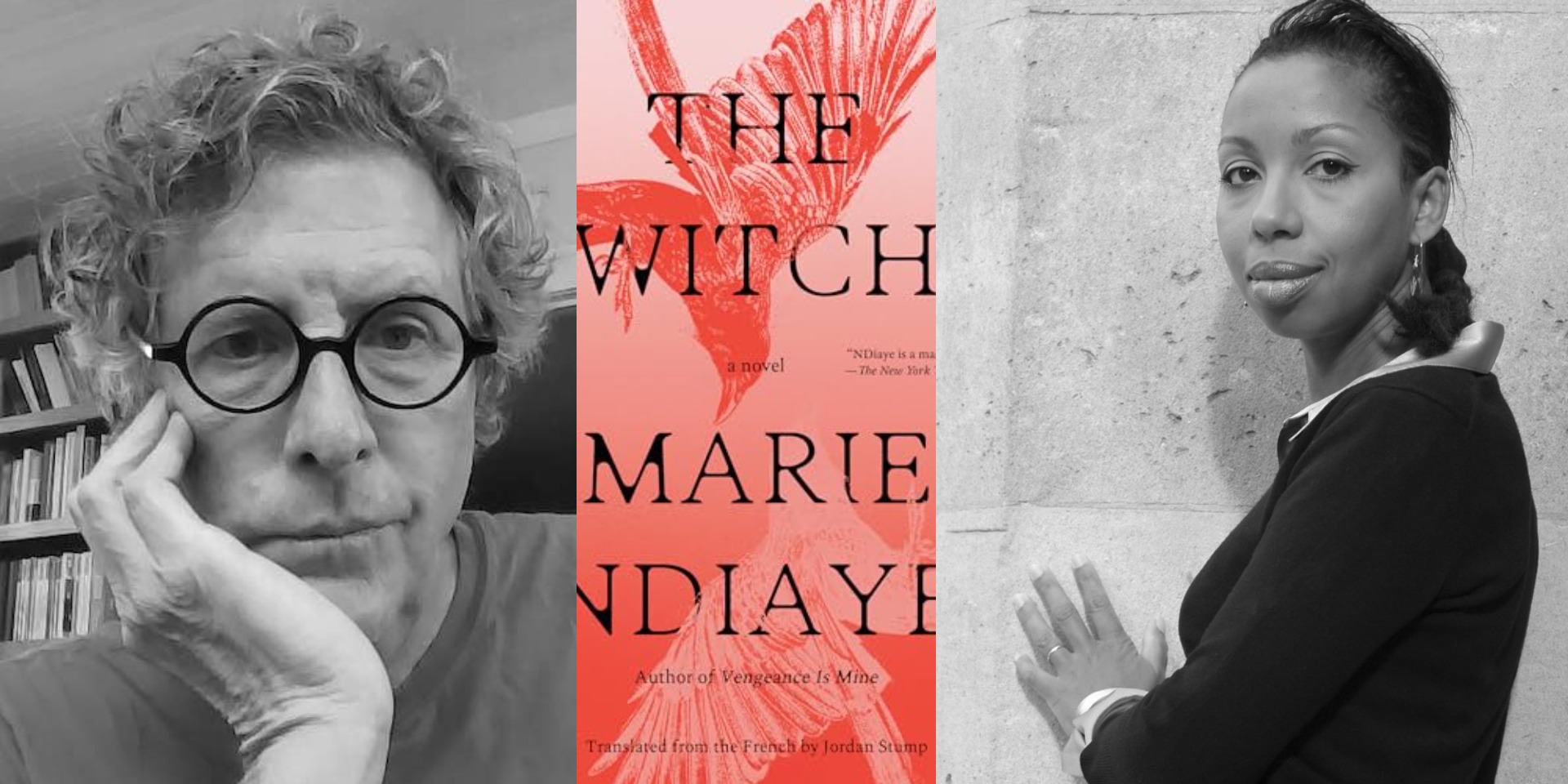
In the intricate tapestry of global storytelling, the translator is often the silent weaver, ensuring that the patterns and textures of one culture remain vibrant when moved to another. In this episode of Harshaneeyam, we sit down with Jordan Stump, a distinguished professor of French at the University of Nebraska-Lincoln and one of the most respected translators of French literature today. With a career that spans decades and includes some of the most challenging voices in modern fiction, Stump’s work is a masterclass in the "living archive" of contemporary world literature.
From the Strings of a Cello to the Rhythm of Prose
Interestingly, Stump’s journey into the heart of French literature did not begin with a book, but with a musical instrument. As a child of professors, Stump found himself in Paris at the age of 11 during his father's sabbatical. It was here that two formative events occurred: he began to learn the French language, and he discovered a deep passion for music.
For many years, Stump was a dedicated cellist. However, he eventually realized that while he loved music, he lacked the "extraordinary gift" required for a professional career. Yet, the years spent studying scores and rhythms were not wasted. He transitioned this musicality into his academic life, finding that the same attention to "tempo, phrasing, and tone" required to play a Cello was essential for translating the "looping, lyrical sentences" of French prose.
The Marie NDiaye Partnership: A Decade of Excellence
A central pillar of Jordan Stump’s career is his long-standing collaboration with the visionary author Marie NDiaye. NDiaye, the first Black woman to win the prestigious Prix Goncourt, writes prose that is famously "unsettling" and "dreamlike".
Stump’s translations of NDiaye’s work have consistently been recognized by the global literary community:
Ladivine: This haunting family saga was longlisted for the 2016 International Booker Prize.
The Witch: His most recent translation of NDiaye's earlier work has been longlisted for the 2026 International Booker Prize.
Stump describes NDiaye’s style as a "balancing act." Her sentences are often long, winding, and grammatically perfect, yet they convey a sense of profound unease. As a translator, Stump’s goal is to maintain that "formal elegance" while ensuring the English reader feels the same "shiver of the uncanny" that exists in the original French.
The "Invisible" Craft: Philosophy and Honors
Beyond NDiaye, Stump has translated a "Who's Who" of French literature, including Honoré de Balzac, Claude Simon, and Jean-Philippe Toussaint. His translation of Simon’s The Jardin des Plantes won the French-American Foundation Translation Prize, a testament to his ability to handle "maximalist" and experimental texts.
In 2006, the French government recognized his immense contribution to global culture by naming him a Chevalier in the Order of Arts and Letters. Despite these accolades, Stump remains humble about the role of the translator. He views himself not as an author, but as a "performer" of the text—much like a musician performing a composer’s score.
"I think of myself as an actor or a musician. My job is to inhabit the voice of the author so thoroughly that the reader forgets I am even there."
The Challenges of the "Long Sentence"
During the podcast, Stump read a passage from NDiaye’s The Witch, illustrating her signature "looping" style. He explains that French allows for a level of structural complexity—using relative pronouns and subordinate clauses—that can often feel "clunky" in English.
The art of the translation, then, is a "re-engineering" process. Stump must break down these massive linguistic structures and rebuild them in English so they retain their "propulsive energy" without losing the reader in the process. It is a task that requires both the analytical mind of a linguist and the sensitive ear of a poet.

Lin King on 'Taiwanese Travelogue'.