Lin King on 'Taiwanese Travelogue'.
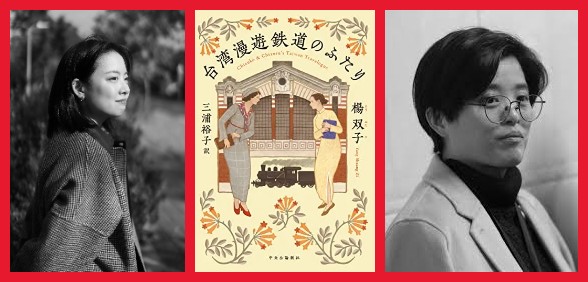
In the modern literary landscape, few works have achieved the "complexity of enchantments" found in Yáng Shuāng-zǐ’s Taiwan Travelogue. Translated by the brilliant Lin King, this novel has become a global sensation, winning the 2024 National Book Award in Translated Literature and earning a place on the 2026 International Booker Prize longlist.
In a recent episode of Harshaneeyam, King shared how this project—originally her master’s thesis at Columbia University—evolved into a profound exploration of colonial history, linguistic power, and the "invisible" labor of the translator.
The Literary Trick: A Novel in Disguise
The most fascinating aspect of Taiwan Travelogue is its structural deception. The book is presented not as a modern novel, but as a "rediscovered" historical artifact. It is disguised as a Mandarin Chinese translation of a fictitious Japanese original.
In the world of the novel, the text we are reading is supposedly a 1930s travelogue titled The Records of the Winter Dust, written by a famous (but fictitious) Japanese author named Chizuko Aoyama. Within the narrative, Aoyama is visiting Taiwan—then a colony of the Empire of Japan—to explore its local customs and cuisine and finds her interpreter Wang Chen-ho. (Japanese Name: O-Chizuru)
The Layered Narrative Structure
The Fictional Japanese Author: Chizuko Aoyama, a Japanese woman writing her observations of colonial Taiwan in Japanese.
The Fictional Mandarin Chinese Translator: Aoyama's lost manuscript is translated into Mandarin Chinese by her interpreter Wang Chen-ho.
The Real Author: Yáng Shuāng-zǐ, a contemporary Taiwanese writer who wrote the entire "discovery" in Mandarin.
The Real Translator: Lin King, who brings this trilingual, multi-layered "hoax" into English.
This nesting creates a profound psychological effect. By writing from the perspective of a Japanese colonizer, Yáng Shuāng-zǐ forces the reader to see Taiwan through an "outsider’s" lens, while simultaneously critiquing that lens through the modern footnotes provided by the "fictional translator."
Language as a Colonial Tool
Lin King notes that the novel is a deep dive into the power dynamics of language. In 1930s Taiwan, Japanese was the language of prestige and government, while Taiwanese (Hokkien) and various Indigenous languages were marginalized.
The protagonist, Aoyama, relies entirely on her local interpreter, O-Chizuru, to navigate the island. Their relationship is the emotional core of the book, but it is constantly strained by the colonial hierarchy. Aoyama sees herself as a benefactor, famously offering to be the "easterly wind" that lifts O-Chizuru’s wings, only to be met with the firm reminder that a bird does not always wish to be "helped" by its cage-keeper.
Translating the "Translation"
For Lin King, translating this book was an exercise in linguistic archaeology. She had to capture a specific "translationese"—a style of Mandarin that sounds like it was translated from 1930s Japanese.
The Aesthetic: King had to maintain the "propulsive energy" of a travelogue while preserving the formal, somewhat distanced tone of a Japanese intellectual of that era.
The Trilingual Challenge: The text involves Mandarin, Japanese, and Taiwanese. King, who is trilingual herself, had to ensure that the "textures" of these different languages remained visible to the English reader.
Lin King: A New Voice in Global Letters
Lin King’s journey is a testament to the "adventurous mind" required for world-class translation. Growing up in Taipei and moving to the US for college, she initially felt a "loneliness" for Mandarin that drove her toward translation. Under the mentorship of giants like Susan Bernofsky and Paul Muldoon, she honed the skill of "bringing a language to life".
Beyond her work with Yáng Shuāng-zǐ, King is an accomplished fiction writer whose debut novel, Weeb, is highly anticipated. She has also translated the powerful graphic novel The Boy from Clearwater, which explores the "White Terror" era of Taiwanese history.
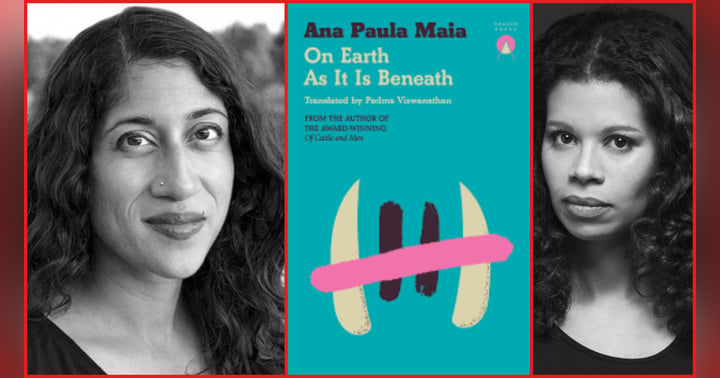
Voicing the Gritty World of Ana Paula Maia with Padma Viswanathan